
Nowadays, orthodontics offers multiple options, but the two most popular are Invisalign (clear aligners) and traditional braces. Both techniques achieve the goal of correcting teeth alignment, but the patient’s experience is very different.
If you’re deciding between Invisalign vs braces, this article will give you a clear guide with advantages, disadvantages, and recommendations to help you choose the treatment that truly fits your lifestyle.
Differences Between Invisalign and Braces
Although both treatments aim to correct dental alignment, the process is different.
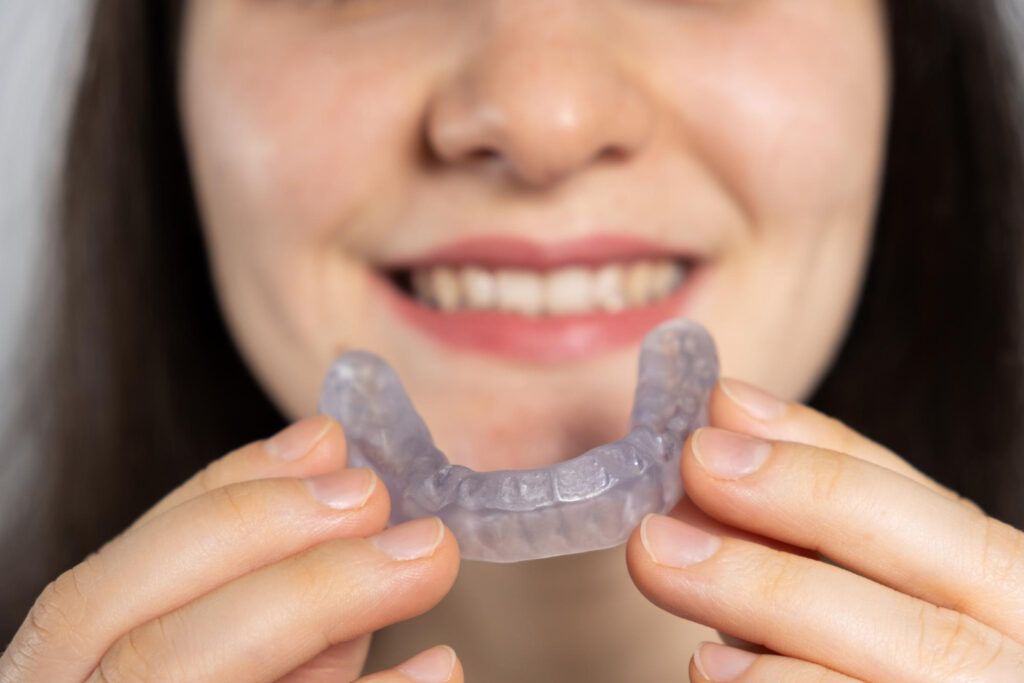
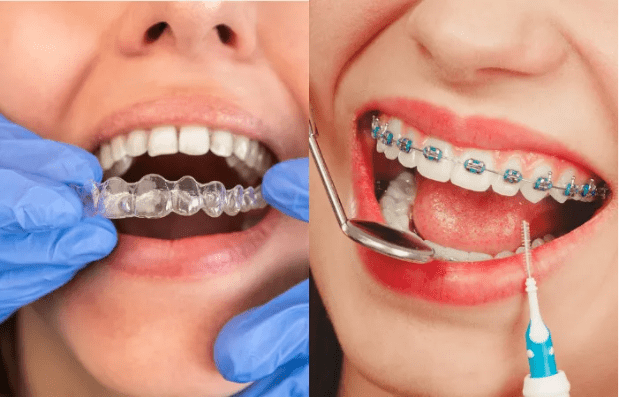
Invisalign uses removable, transparent aligners, almost invisible to the eye, which are changed every few weeks to gradually move the teeth.
Braces rely on metallic (or ceramic) brackets that are bonded to the teeth and apply pressure through wires and elastic bands.
The key difference lies in aesthetics, comfort, and the flexibility offered to the patient.
Advantages of Invisalign
- Discreet aesthetics
The aligners are transparent and almost unnoticeable, making them ideal for those who want orthodontic treatment without affecting their personal or professional image.
- Comfort and removability
You can take them off to eat, brush your teeth, or attend special events. This improves oral hygiene and avoids food restrictions.
- Personalized treatment
Invisalign uses 3D technology that allows you to visualize the results before starting and plan each stage.
- Fewer dental visits
It usually requires fewer appointments than braces since aligner changes are scheduled in advance.
Disadvantages of Invisalign
- Discipline required: Since they are removable, they depend on the patient’s commitment (they must be worn 20–22 hours a day).
- Higher cost: Invisalign is usually more expensive than traditional braces.
- Not suitable for all cases: In very severe malocclusions, the orthodontist may recommend braces.
Advantages of Braces
- Effectiveness in complex cases
Braces are highly effective for severe dental problems, such as open bites, deep overbites, or severely misaligned teeth.
- Lower cost
In general, metal braces are more affordable.
- No patient discipline required
Since they are fixed, there’s no risk of forgetting or not wearing them enough.
Disadvantages of Braces
- Aesthetic impact: Metal braces are visible, which can affect some patients’ confidence.
- Food restrictions: It’s not recommended to eat hard or sticky foods as they can damage the braces.
- More complicated hygiene: Brushing and flossing require extra care to avoid cavities or stains.
- Initial discomfort: They often cause irritation on the lips and cheeks, especially at the beginning of treatment.
Frequently Asked Questions About Invisalign vs Braces
Which is faster, Invisalign or braces?
The treatment duration depends on the diagnosis. In mild cases, Invisalign may be faster; in complex cases, braces are usually more efficient.
Does Invisalign hurt less than braces?
Both treatments create pressure to move teeth. However, Invisalign tends to be more comfortable and causes fewer irritations.
Which option is better for adults?
Many adults prefer Invisalign because of its discretion and comfort. However, if the case is complex or the budget is limited, braces remain a great alternative.
Can you switch from braces to Invisalign during treatment?
In some cases, yes. The orthodontist can evaluate whether the transition is possible.
Example: How They Influence Lifestyle
Imagine Mariana, a 32-year-old executive who often gives presentations. For her, aesthetics are essential, so she chose Invisalign and managed to align her smile without anyone noticing.
On the other hand, Juan, a high school student with a complicated bite, chose metal braces because he needed a more comprehensive and affordable treatment.
Both achieved the same goal: a perfectly aligned smile. The difference lay in their lifestyle, needs, and circumstances.
So… Invisalign or Braces?
There is no universal answer. The choice depends on:
- Your budget.
- The complexity of your case.
- Your discipline and lifestyle.
- Your orthodontist’s recommendation.
The most important thing is that today you have options that adapt to you—and the real first step is to consult your orthodontist.
The difficult decision between Invisalign or traditional braces is not about which one is “better,” but about which treatment best suits your life. Invisalign offers discretion and comfort, while braces guarantee effectiveness in all types of cases.
The truth is, no matter your choice, you are investing in more than just aesthetics: a healthy smile that will boost your confidence and your future.